
Clarity rarely comes from burning everything down. And it rarely arrives by accident.
Clarity is a practice, and it's really about revealing what matters so the next step becomes unmistakable. It's about strengthening the signal that's already there beneath the noise.
These simple practices can help you on your way to clarity: archiving, deleting, and refining.
Practice 1: Archiving
Move it out of sight so you can focus on the signal.
Archiving gets things off your radar, out of sight but not gone, so your attention isn't constantly pulled by them. It reduces noise, protects signal, and opens space for clarity.
I started thinking about this when reading Tiago Forte11Building a Second Brain, by Tiago Forte.. It inspired me with a systematic approach that's remarkably simple.
In my life-organizing Notion, I keep an archive as one of my core folders:
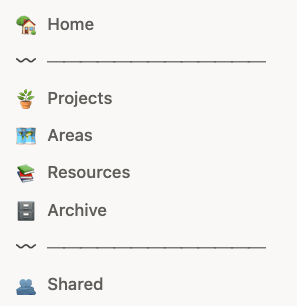
Archive the things you're unsure about—old ideas, paused projects, half-finished notes—so they stop pulling on your attention without disappearing forever.
Archiving is gentle. It's not "goodbye forever," it's "rest here and I'll come back if needed."
I practice this here, too. Everything on this site that no longer fits my direction is archived: off the journal, but every URL still works. This note is the only place they're listed.
Open the archive7 notes · 5 projects
- Fluency Tools
- Data Visualization Tools
- Sound Data Solutions (redirects to Rooted Insight)
- WordSnare
- Flat Icons (platform discontinued)
Practice 2: Deleting
Remove the non-essentials so the essentials can breathe again.
Deleting removes what no longer serves you. It's a bolder, more definitive action than archiving, and it's even more freeing.
I started paying attention to deleting after hearing Elon Musk talk about removing anything unnecessary. Since then, I've loved the idea of deleting until only what's essential22Essentialism, by Greg McKewon. remains.
When you design your life, notice your instinct when new information comes in: Is your default to add something? That's normal—almost everyone does it. But adding isn't always the best strategy.
You can delete both digital and physical clutter: material things, commitments, relationships that drain you.
It's not harsh; it's reclaiming agency and shaping your life intentionally.
Practice 3: Refining
Once the noise is gone, amplify the signal on your best work.
Refining takes the material you kept (the things that matter) and gives them a clearer, more intentional form. It sharpens both meaning and quality.
When I reworked this site's header, I found three ways to reach me: a contact link, a "work with me" link, and a boxed button. Each was worth keeping, but together they crowded the choice. Now it's a single "contact" link.
Refine the things worth keeping: great ideas, writing, habits, systems. Sit with them and consider how they fit into your bigger purpose, and how you'll integrate them into your life.
A final thought
You don't find clarity, so you don't need to wait for it.
You create clarity by making way for it. Consistency creates it, not intensity.
Every time I archive, delete, or refine, I'm reminded that clarity isn't emptiness. It's space for the right things to come into focus.